Claims
How the insurance claim process works with AT Max
A storm claim is a sequence, not a promise that a roof will be paid for. You stay the insured. The carrier decides coverage. We inspect, document, meet the adjuster with you, and build the scope you approve.
Call soon
Claims generally must be filed within a limited window after the storm. The deadline is in your policy. We do not print a number of years here, because guessing it would be worse than reading the form. Call (385) 333-9637 so the inspection happens while the damage is still easy to see. If the roof is open to weather, that same number is answered 24/7 for emergency tarping.
The steps
01
Free inspection and documentation
We inspect the roof at no charge when the visit is tied to work we might do. The notes include test squares where a measured patch of shingles needs a closer look, and a photo report organized so you can see what we saw. That file is what you have in hand before anyone talks to a carrier.
02
File the claim
You file with your own insurer. You are the insured. Most policies give you a limited time after the storm to open a claim. That window is written in the policy, and it is shorter than many people expect. Call soon so the damage is documented while it is still readable. We will not guess a number of years on this page.
03
We meet the adjuster with you
When the carrier schedules an adjuster, we can be on the roof with you. We walk the same slopes, show the photos and the test squares, and answer construction questions. The adjuster still works for the carrier. We do not tell you the meeting means the claim is approved.
04
Claim decision and scope
The carrier decides what is covered and writes a scope. Replacement cost value, or RCV, is the cost to do that work at current prices. Depreciation is the amount held back for age and wear. Actual cash value, or ACV, is the replacement cost minus depreciation. Many policies pay ACV first. If your policy includes recoverable depreciation, the held-back amount can be released after the work is done. Some policies do not pay it back. That is a policy question, not a promise from us.
05
You pay your deductible
On a covered scope, your share of that scope is your deductible. Utah law and insurance rules require homeowners to pay their deductible, and we never waive it. A contractor who offers to eat it is telling you the invoice and the scope are not the same document. Work the carrier does not cover, including an upgrade you choose, is priced separately on our estimate.
06
We build
After you decide to proceed, we build the scope you signed. A tarp or a plastic cover is only a temporary dry-in. It is not the finished roof, and it is not proof the carrier will pay.
07
Depreciation release and final payment
When the roof is done, recoverable depreciation is requested with proof of the completed work. The carrier reviews that and releases what the policy allows. The timing and the amount are their decision. We do not promise a final check or a date.
What the photos are for
Chalk circles mark hail hits during an inspection. A finished roof is what a covered replacement is aiming at, not a before-and-after of one address. Captions do not name a city or a customer. The full inspection report is described on the roof inspections page. Storm tarping and hail damage sit on the storm and hail page.
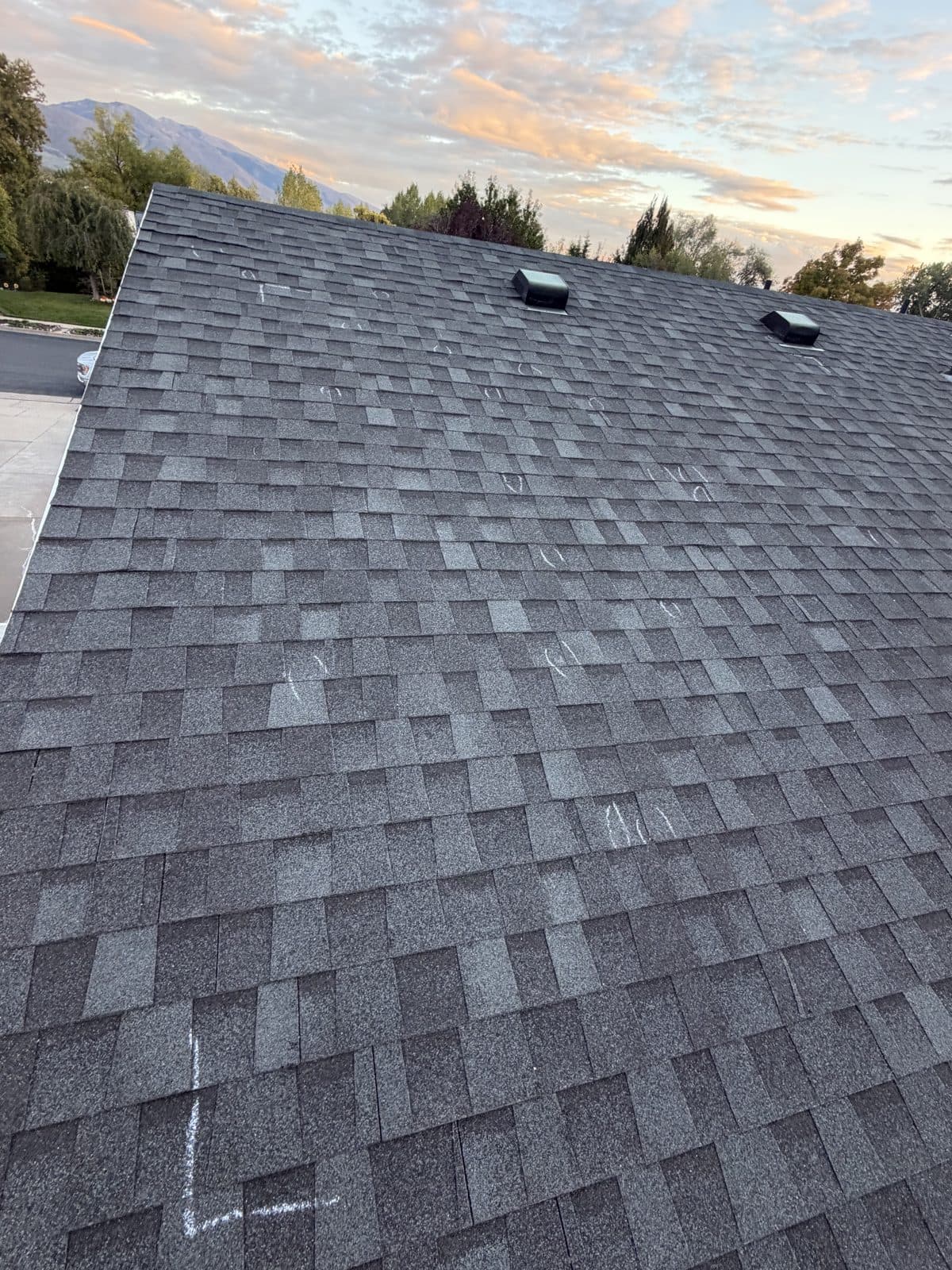
Hail hits circled during an inspection 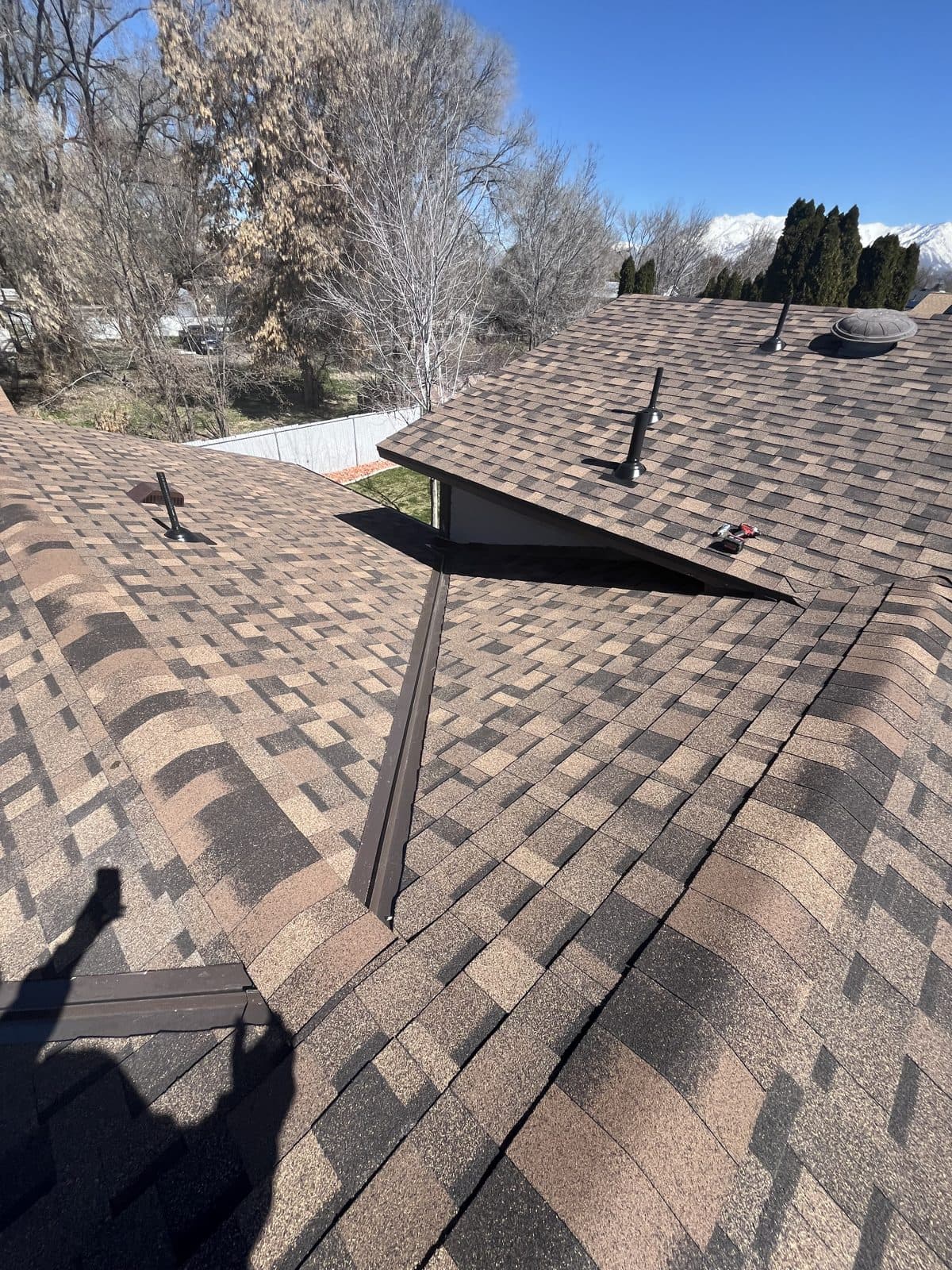
Finished shingle roof with a metal valley
Hail versus wear and tear
Hail damage is a bruise or a fracture that compromises how the roof sheds water. On asphalt, that is a mat you can feel or a break in the shingle, not a shiny spot that disappears when the roof dries. On metal, look for dents or a coating that has been breached. Tile and slate are usually fine unless a piece is split. Granule loss from years of sun, curled tabs, and pipe boots cracked by ultraviolet light are wear. We separate those so a storm file does not call age a hailstorm.
Collateral damage we check
A storm rarely hits only the shingles. From the roof and the ground we look at the pieces a hailstone can mark:
- Gutters and downspouts
- Screens
- Siding and window cladding
- Air-conditioning units
- Paint chips
- Fences
- Garage doors
- Mailboxes
We write down what we can see. We do not turn a roof inspection into a whole-house claim, and we do not guarantee the carrier will pay for any of it.
Homeowner questions
Plain answers. None of them is a promise that a claim will be paid.
Do I need three bids?
On an insurance claim, the carrier sets the scope and the price for what they cover. The lowest bid on that scope usually means cheaper materials or a thinner method, not the same roof for less money. On a retail job with no claim, compare written scopes. The useful difference is what is included.
Will filing a claim raise my premium?
Storm claims are generally treated as acts of nature rather than at-fault claims, but policies vary. Ask your agent how a claim affects your premium before you file. A contractor’s guess is not the answer.
Can you cover my deductible?
No. Utah law and insurance rules require homeowners to pay their deductible, and we never waive it. Anyone who offers to cover it is describing an invoice that does not match the scope.
Why choose a local contractor?
AT Max is licensed in Utah, license #10903532-5501, and has been roofing here since 2002. Warranty questions come back to the West Valley shop. We are still here after the out-of-town storm crews leave.
How long does a claim take?
There is no honest single number. The adjuster’s calendar, the carrier’s review, materials, and weather all move it. We document the roof once it is safe to walk. We will not promise a decision by a certain day.
What if my claim is denied?
Ask the carrier for the reason in writing, and use their appeal process if you disagree. We will show you what we documented. We will not tell you a denial is something we can overturn, and we will not start a tear-off that only works if a check arrives. A worn-out roof can still be a retail job. That is a written estimate, separate from the claim.
What does a free inspection include?
A walk of the slopes we can reach safely, test squares where they help, photos you can read slope by slope, an estimated age and condition when the evidence supports them, notes on collateral damage we can see, and a plain recommendation. Good, better, and best show up when there is a real choice. The visit is free when it is tied to work we might do. A stand-alone report for a sale, with no plan to hire us, is a different appointment.
Start with the inspection.
The visit documents the roof. Filing, the adjuster, and the build come after you understand the deductible and the carrier’s decision.
Emergency roof calls answered 24/7. (385) 333-9637.